
Articles Featuring Fenceline Watch
For press inquiries please email: brandon@fencelinewatch.org
Featured
For press inquiries please email: brandon@fencelinewatch.org
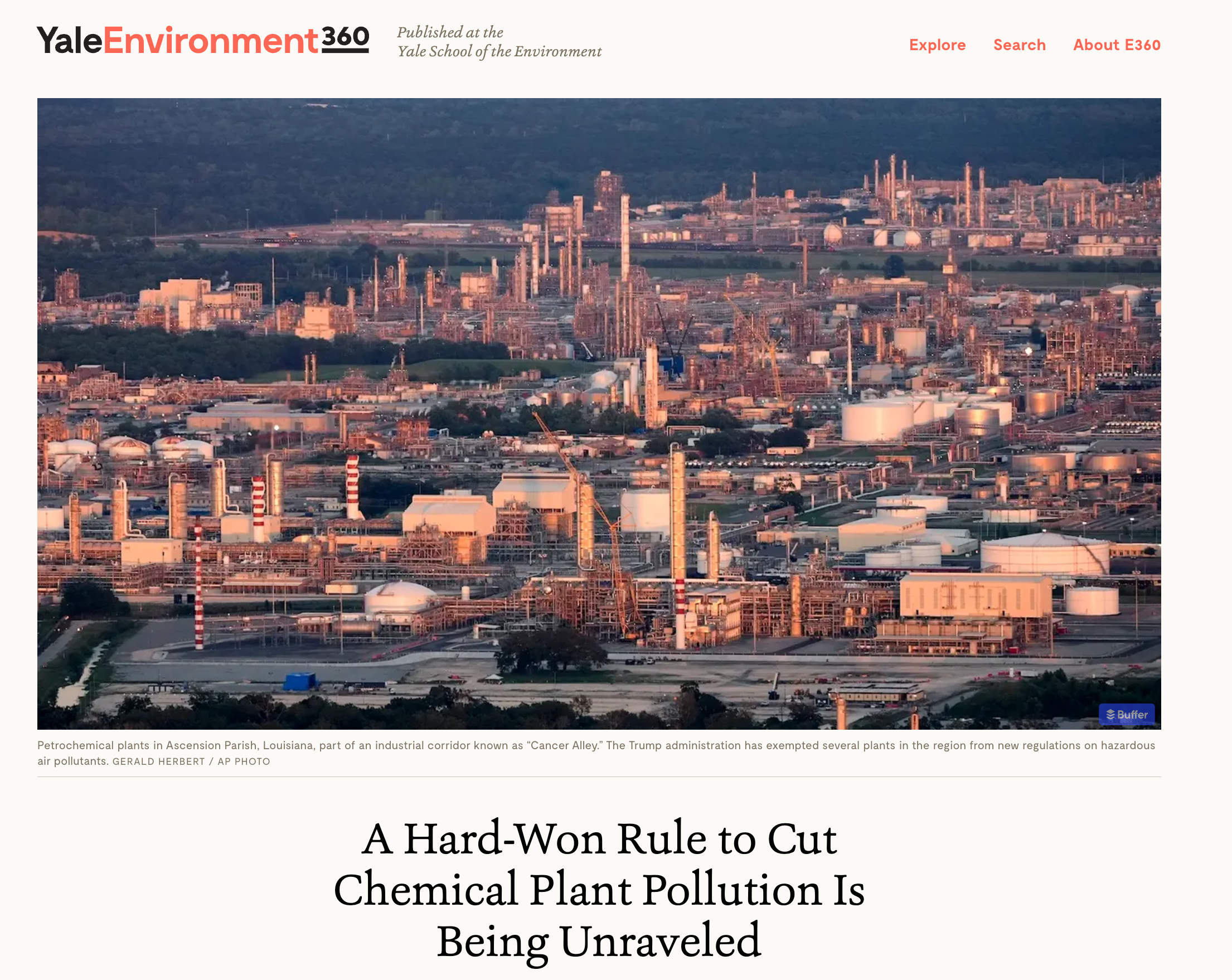
YALE ENVIRONMENT 360
In 2024, the Biden administration enacted wide-ranging regulations to protect communities near petrochemical plants from air toxics. The Trump administration has since granted exemptions to scores of polluting facilities and is working to rewrite the long-awaited rule.
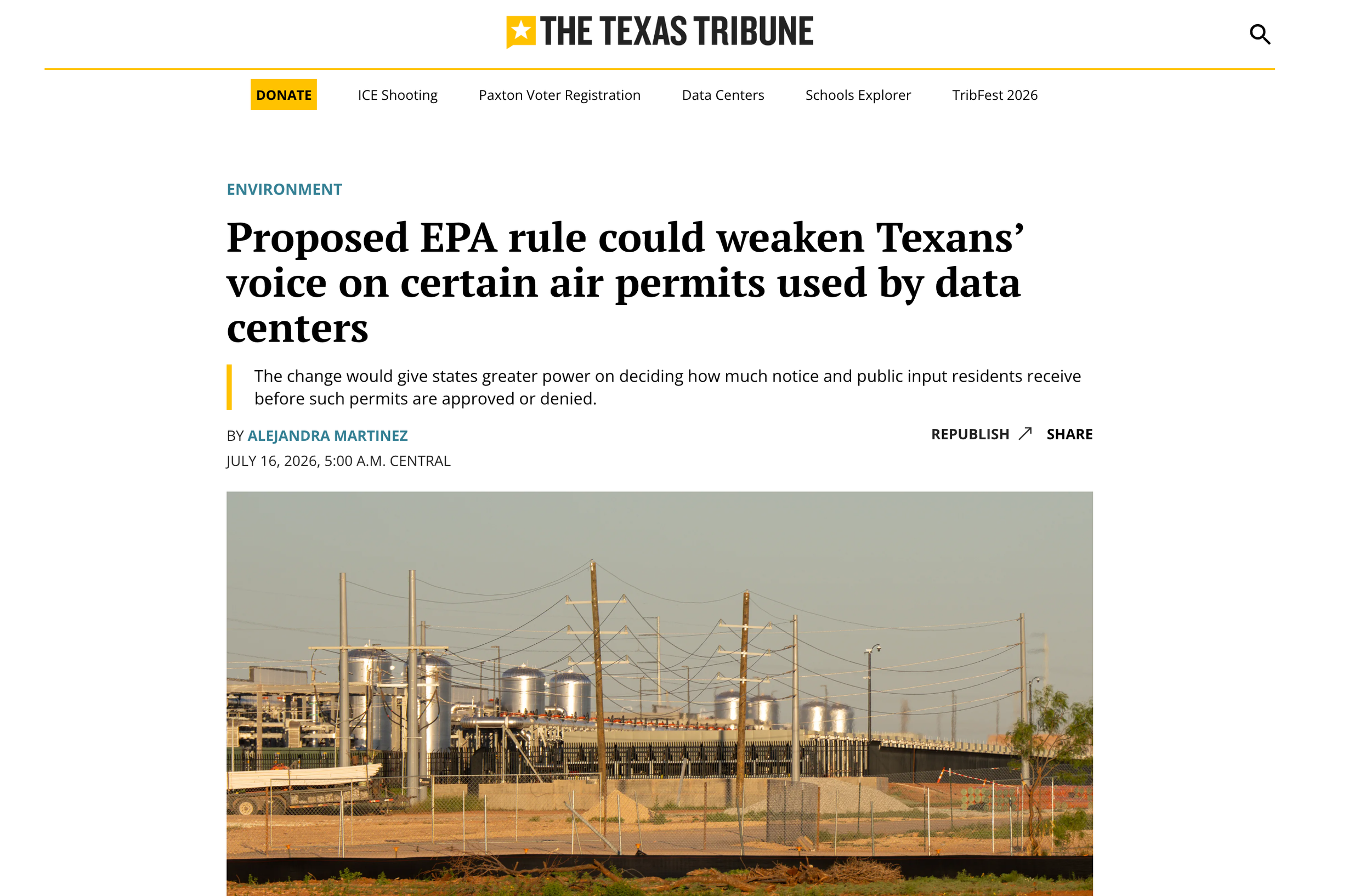
THE TEXAS TRIBUNE
The U.S. Environmental Protection Agency is proposing to change its rules for permits issued to so-called minor air polluters by handing states greater power to decide how much notice and public input residents receive before such permits are approved or denied.
For Texans, the rule change could limit their right to speak out about a type of pollution permit that’s commonly issued to concrete batch plants and rock crushers, but is becoming increasingly used by massive data centers coming to the state.
It would allow the Texas Commission on Environmental Quality — the state’s environmental regulator — the authority to rewrite its own rules, which could include scaling back opportunities to protest or challenge permits before they are issued.
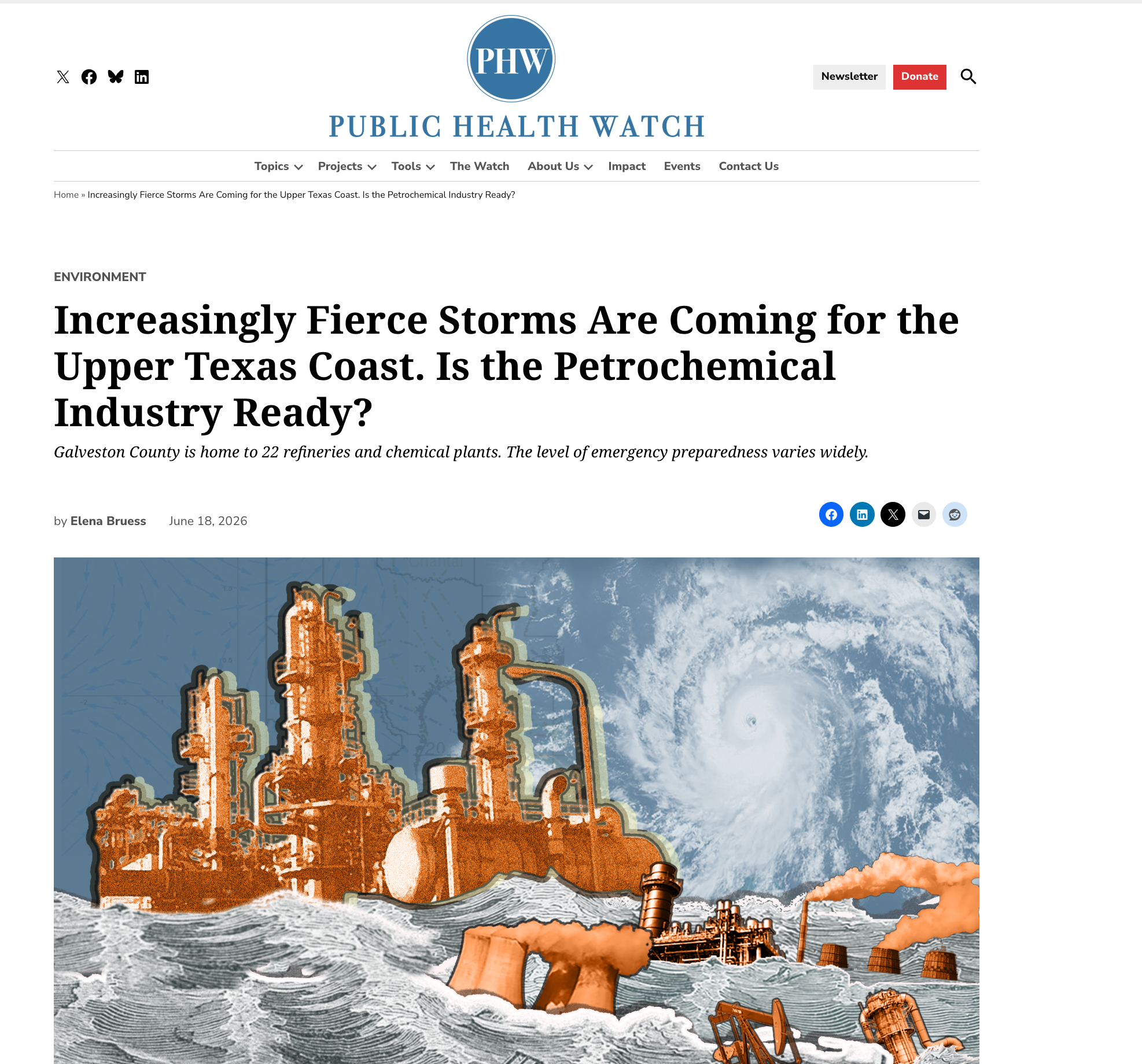
PUBLIC HEALTH WATCH
Nearly two decades had passed since the storm. For many, the memory of what had happened on Goat Island had largely vanished into the Gulf of Mexico.
Instead, what residents remembered that year were the piles of boats and cars washed up along the highway to Galveston and the twisted mounds of debris where homes once stood. It was late summer 2008, and Hurricane Ike had just struck, decimating parts of the upper Texas Gulf Coast.
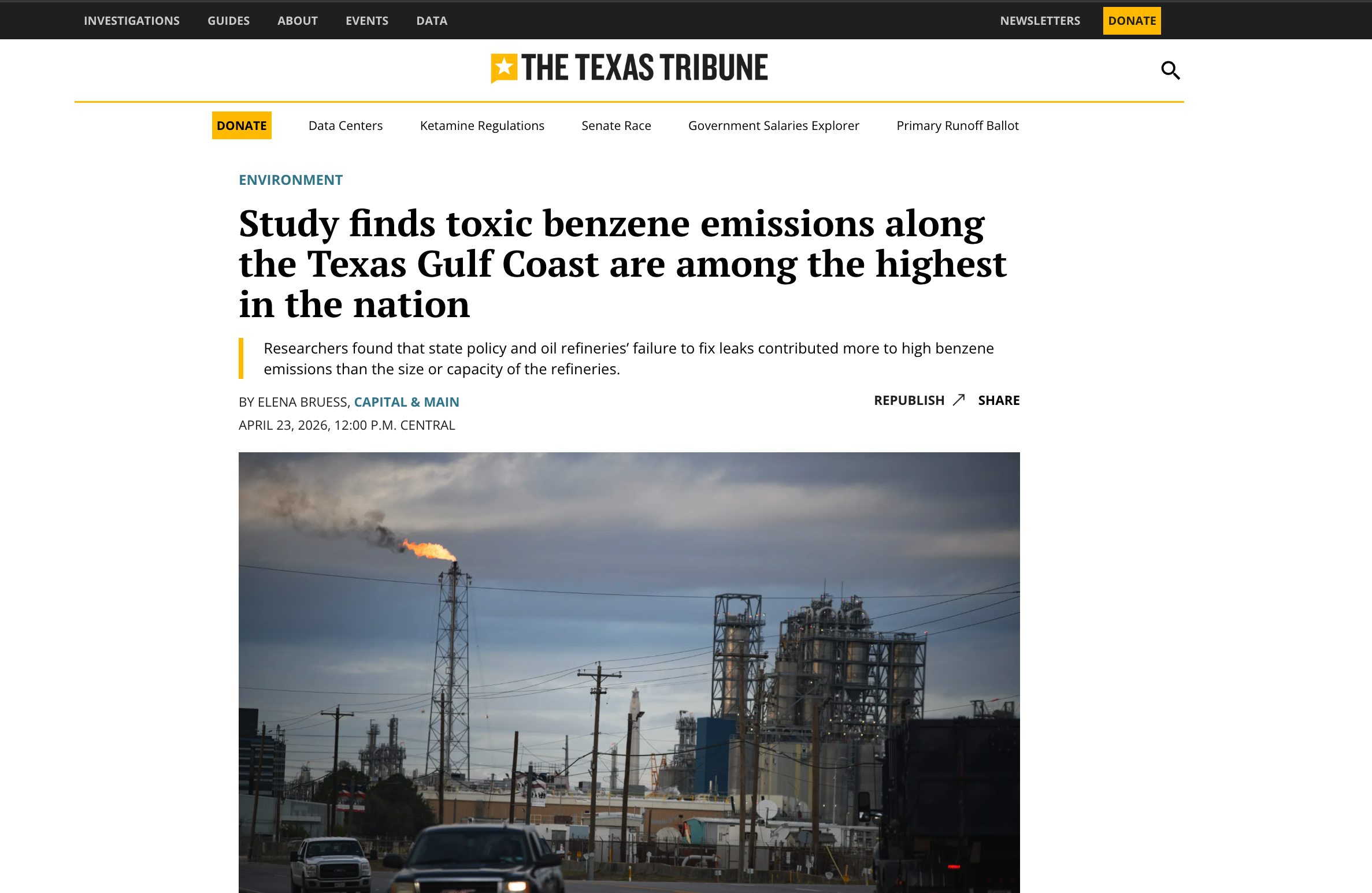
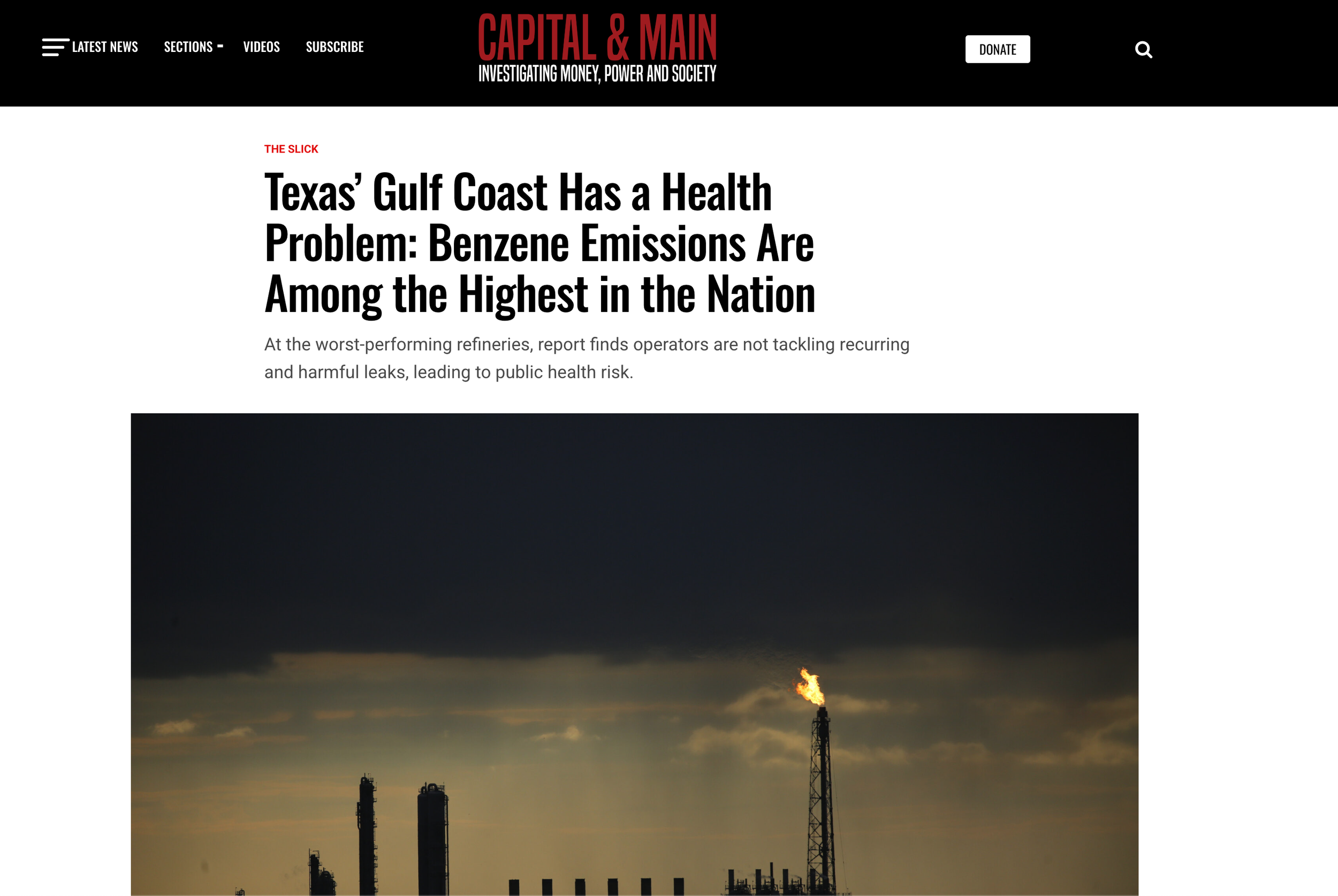
TEXAS TRIBUNE
“It’s not just an immediate impact, but a multigenerational toxic harm that we experience because of emissions like benzene and all of these other petrochemicals,” Srivastava said.
CAPITAL & MAIN
“Our communities in Houston have a very unique exposure rate simply because of the density of infrastructure that is co-located in our communities,” he said. “It’s not a question of if (the facilities) are going to explode or leak or flare, but a question simply when.”
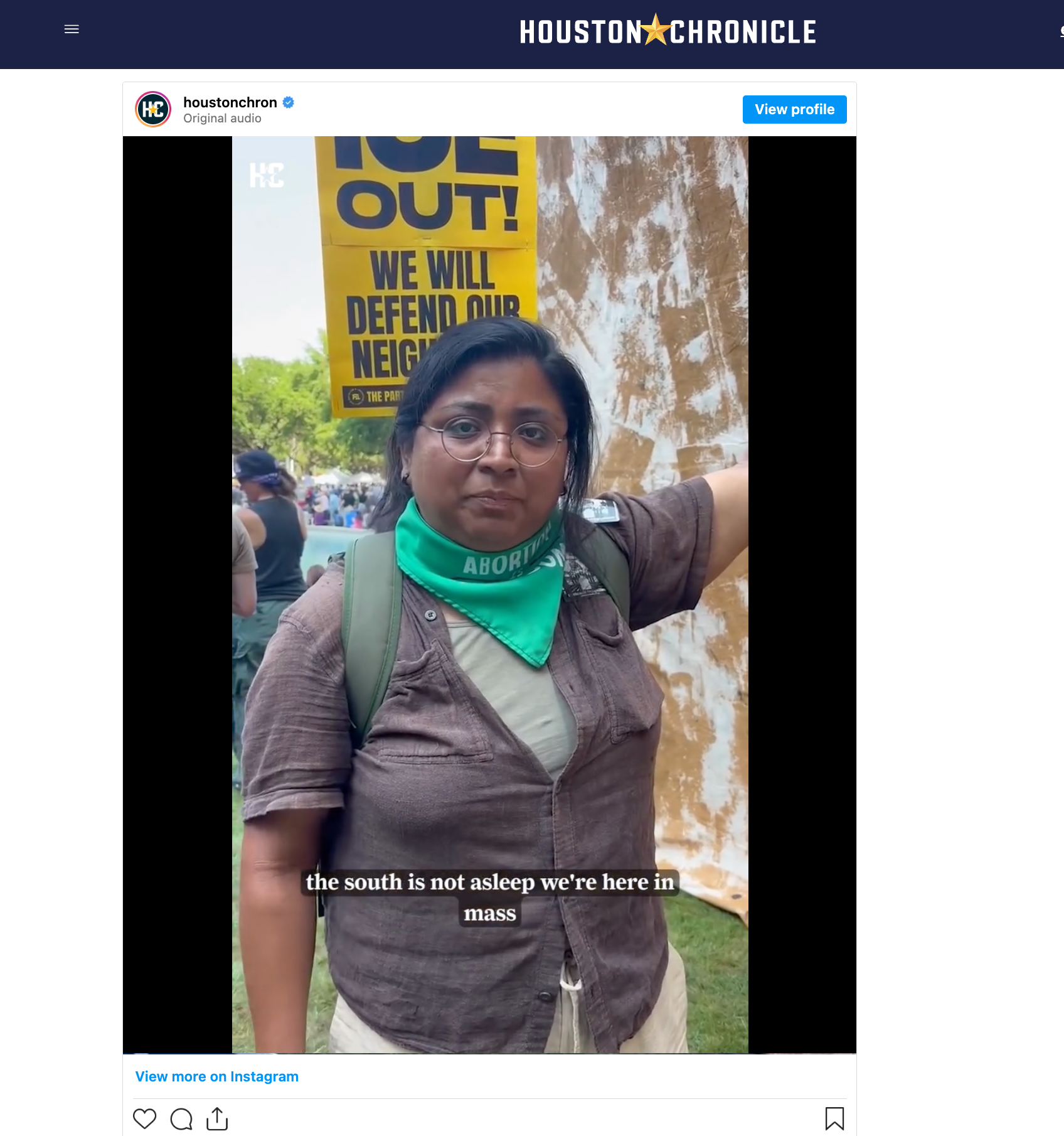
THE HOUSTON CHRONICLE
“It’s our lives that are at stake,” Arellano said. “It’s our families that will suffer at the end of the day, and it’s our youth that will get stolen in order to supply soldiers for this war.”
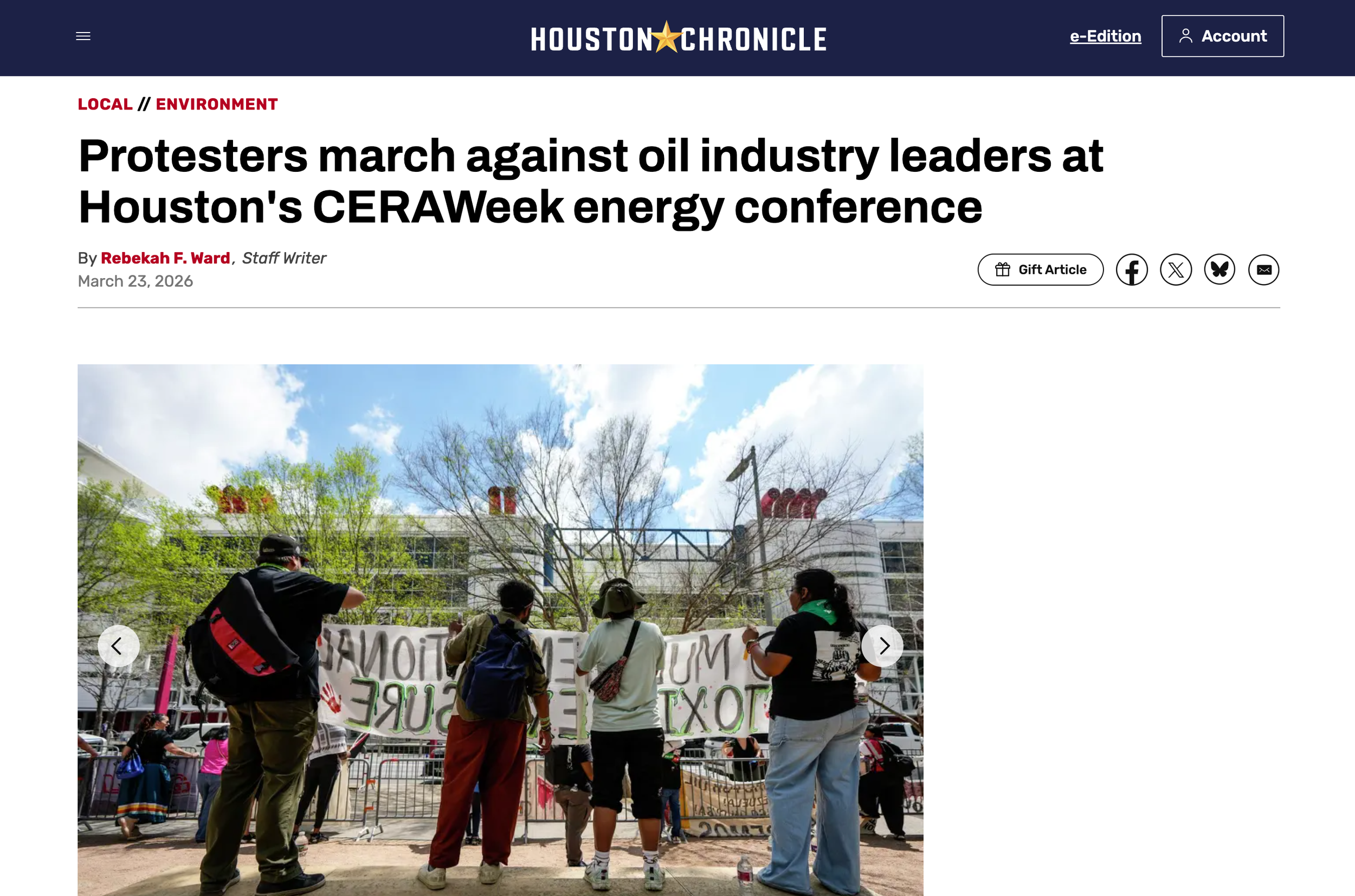
THE HOUSTON CHRONICLE
"What's going on at CERAWeek in the George R. Brown Convention Center right now is a bunch of CEOs, a bunch of multinational corporations making plans to put facilities in our backyards that we won't find out about until years from now, when they're coming to seek a permit. They think that they have the right to our air, the right to our water, the right to our bodies,"
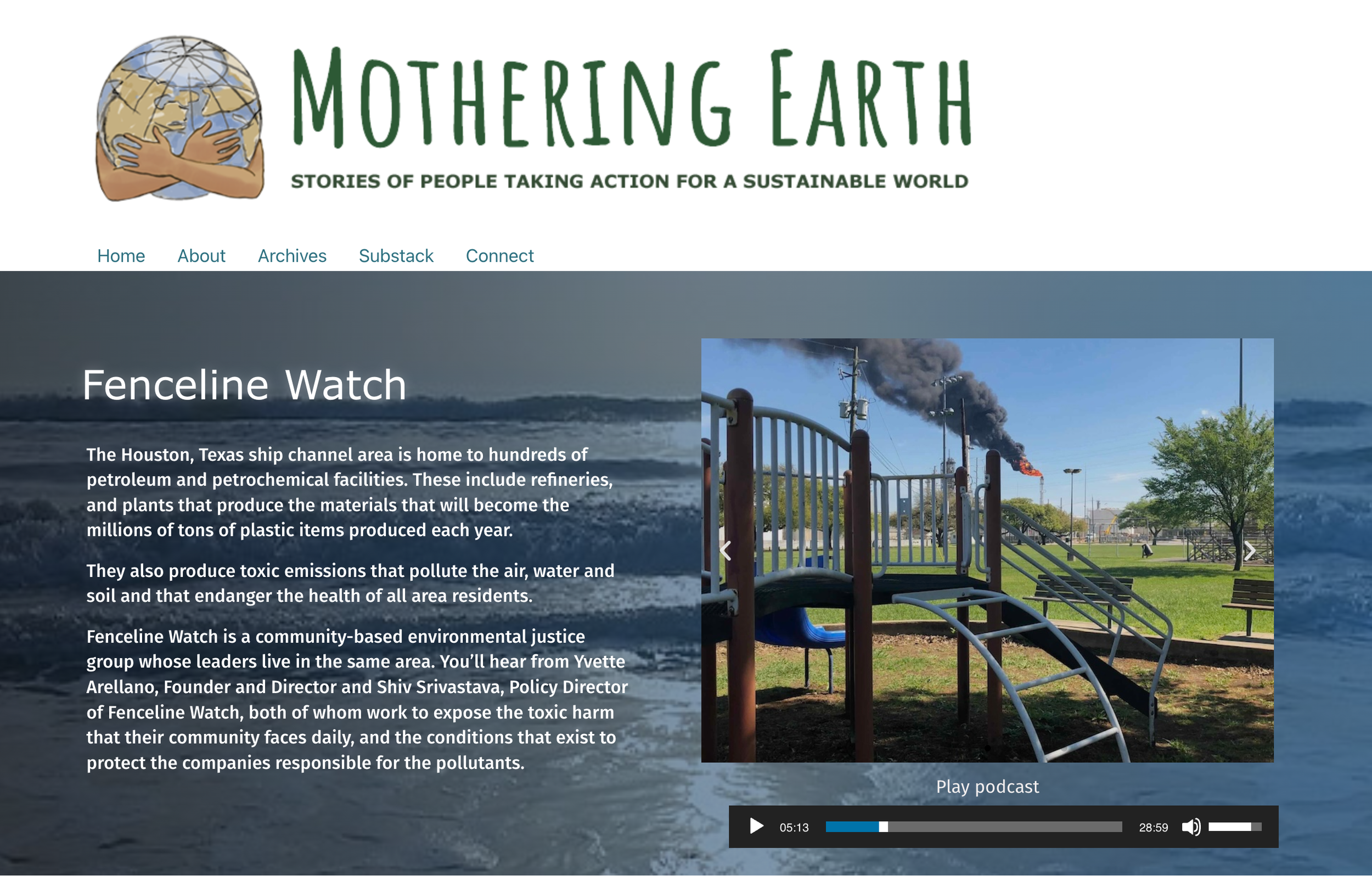
MOTHERING EARTH PODCAST
Fenceline Watch Founder and Director, Yvette Arellano, and Policy Director, Shiv Srivastava, speak on the toxic harm our community faces daily, and the conditions that exist to protect the companies responsible for the pollutants.
NORTHEAST NEWS
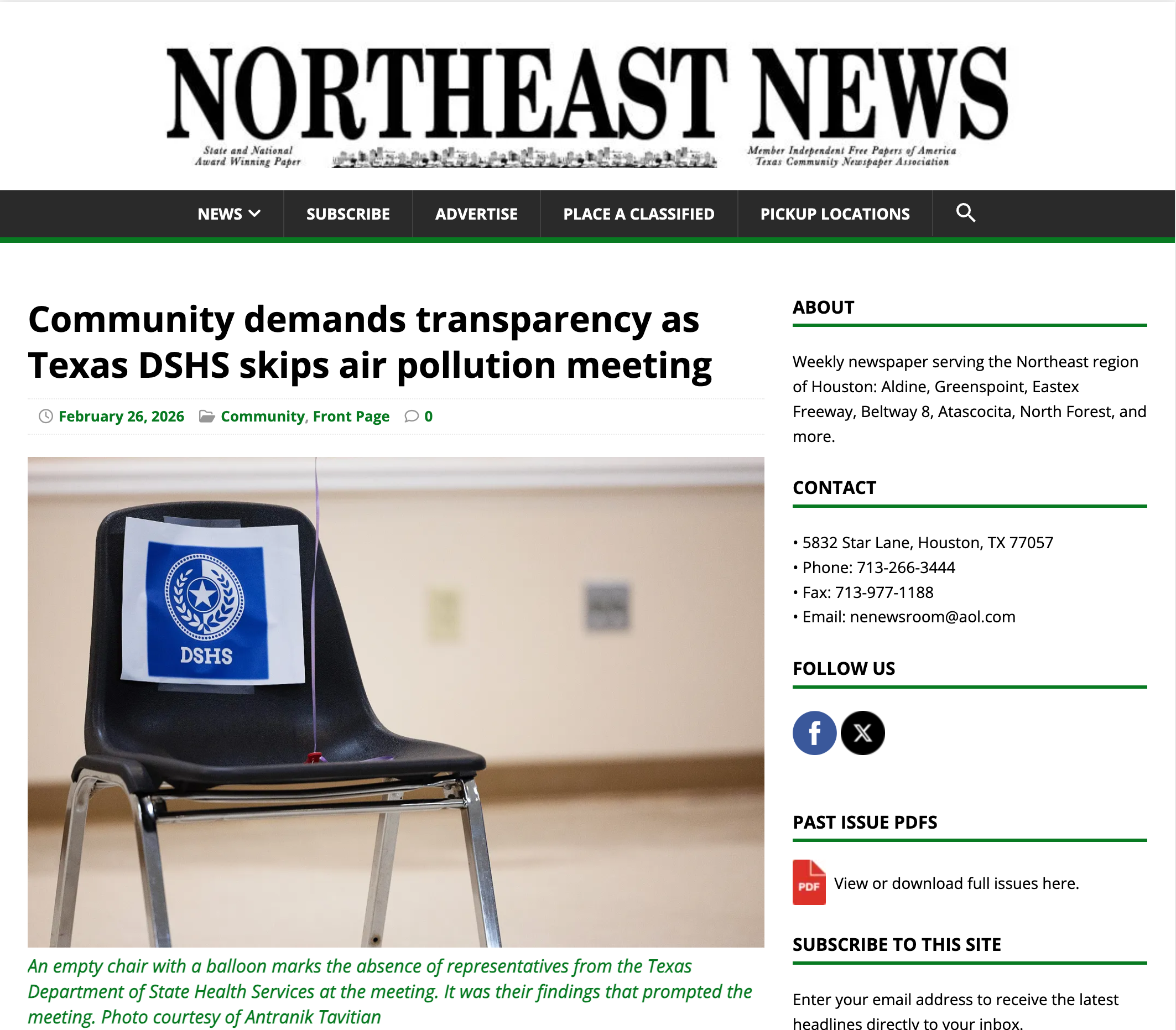
Community leaders, health experts, and residents gathered at the San Jacinto Community Center in Highlands last Thursday to confront the findings of a recent Texas Department of State Health Services (DSHS) cancer study, which revealed significantly elevated rates of leukemia, lung and bronchus cancer, lymphoma, and cervical cancer across a massive area of East Harris County. The panel, organized as a follow-up to Public Health Watch’s October 2025 investigation, brought together advocates and experts to demand greater transparency and immediate action. There was only one problem—the invited guests, Texas Department of State Health Services, was a no-show.
THE COOL DOWN
"From toxic extraction in the Permian Basin to poisonous production along the Houston Ship Channel, the cost is irreversible damage to our children's health — low birth weights and reproductive and developmental harm — spanning generations,"
PUBLIC HEALTH WATCH
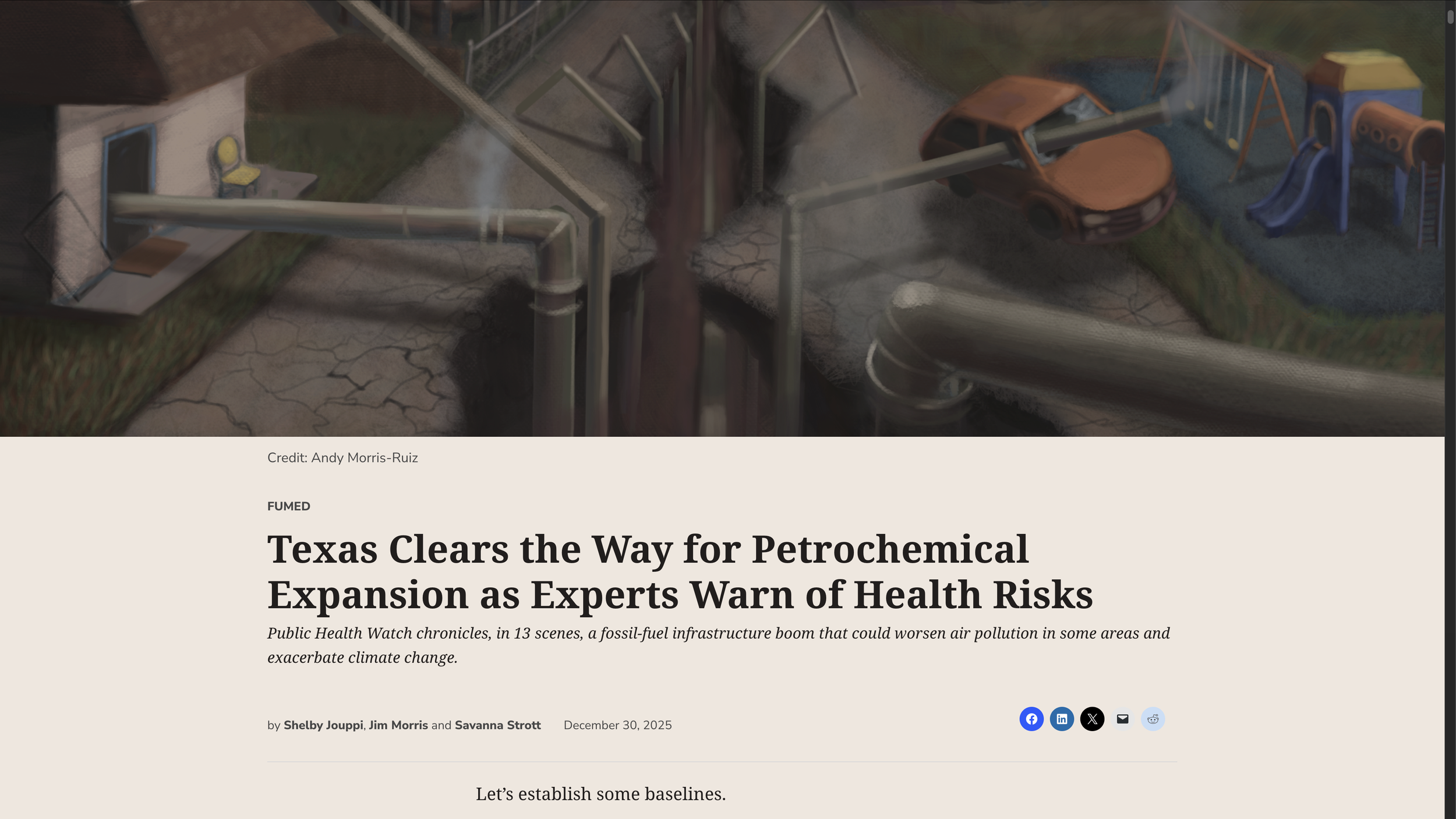
“Let’s establish some baselines.
Texas is responsible for more greenhouse-gas emissions than Saudi Arabia or the global maritime industry. Its oil, gas and petrochemical operations discharge tens of millions of pounds of toxic pollutants into the air each year, comprising almost one-fifth of such releases in the United States.”
HOUSTON CHRONICLE
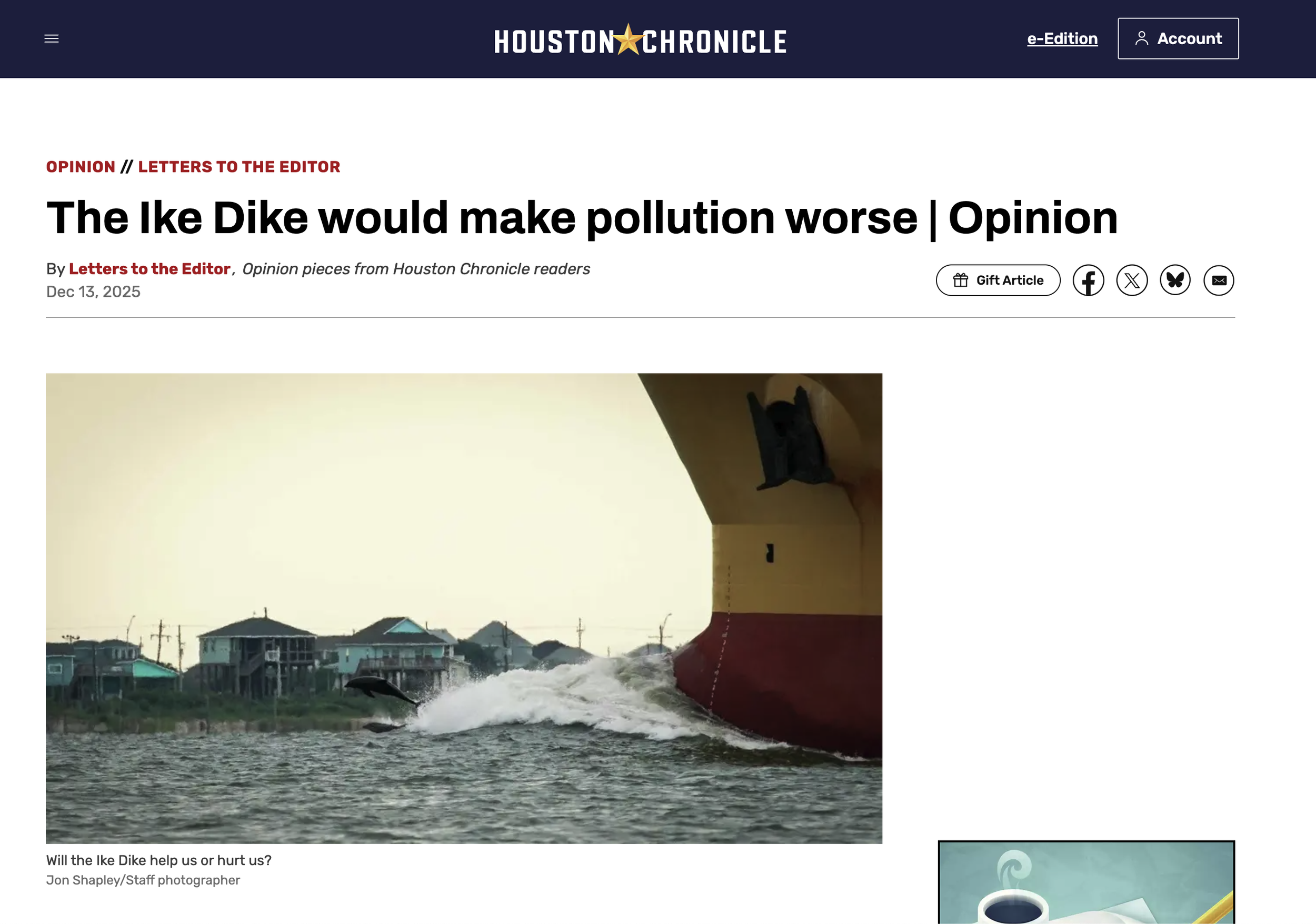
Regarding “Houston Chronicle: John Cornyn: Houston needs the Coastal Texas Project,” (Dec. 05): Senator John Cornyn is pushing lawmakers to fund the $34 billion Coastal Texas Project, commonly known as the Ike Dike, to “build a coastal storm barrier to protect at-risk petrochemical infrastructure and the Texas Gulf Coast.” But it's this same industry that makes disasters like storms and hurricanes worse. Instead of requiring the petrochemical industry to pay to protect their own plants — and protect the people who have lived here long before industry moved in — Sen. Cornyn offers up our tax dollars.