Newsroom
YALE ENVIRONMENT 360
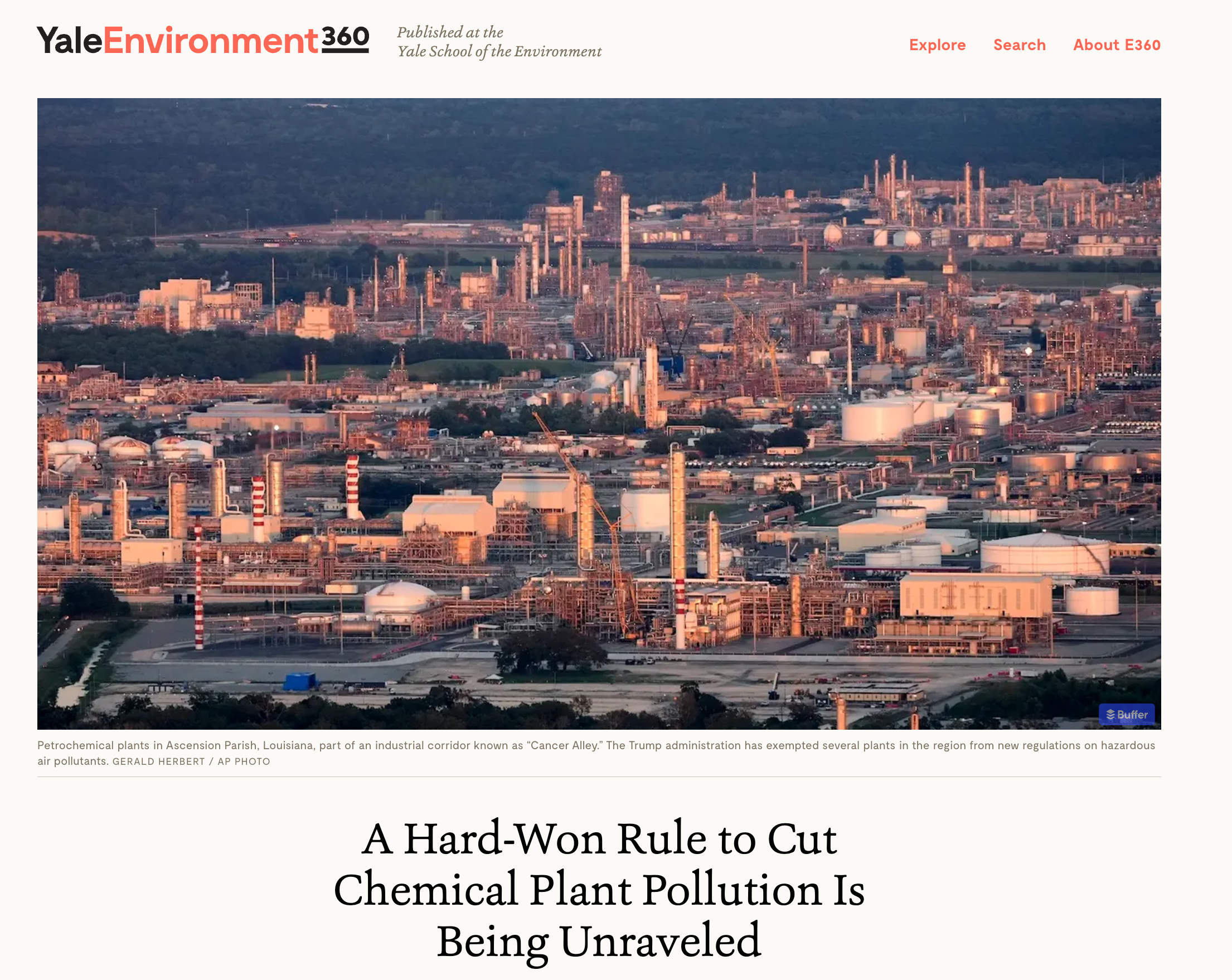
In 2024, the Biden administration enacted wide-ranging regulations to protect communities near petrochemical plants from air toxics. The Trump administration has since granted exemptions to scores of polluting facilities and is working to rewrite the long-awaited rule.
THE TEXAS TRIBUNE
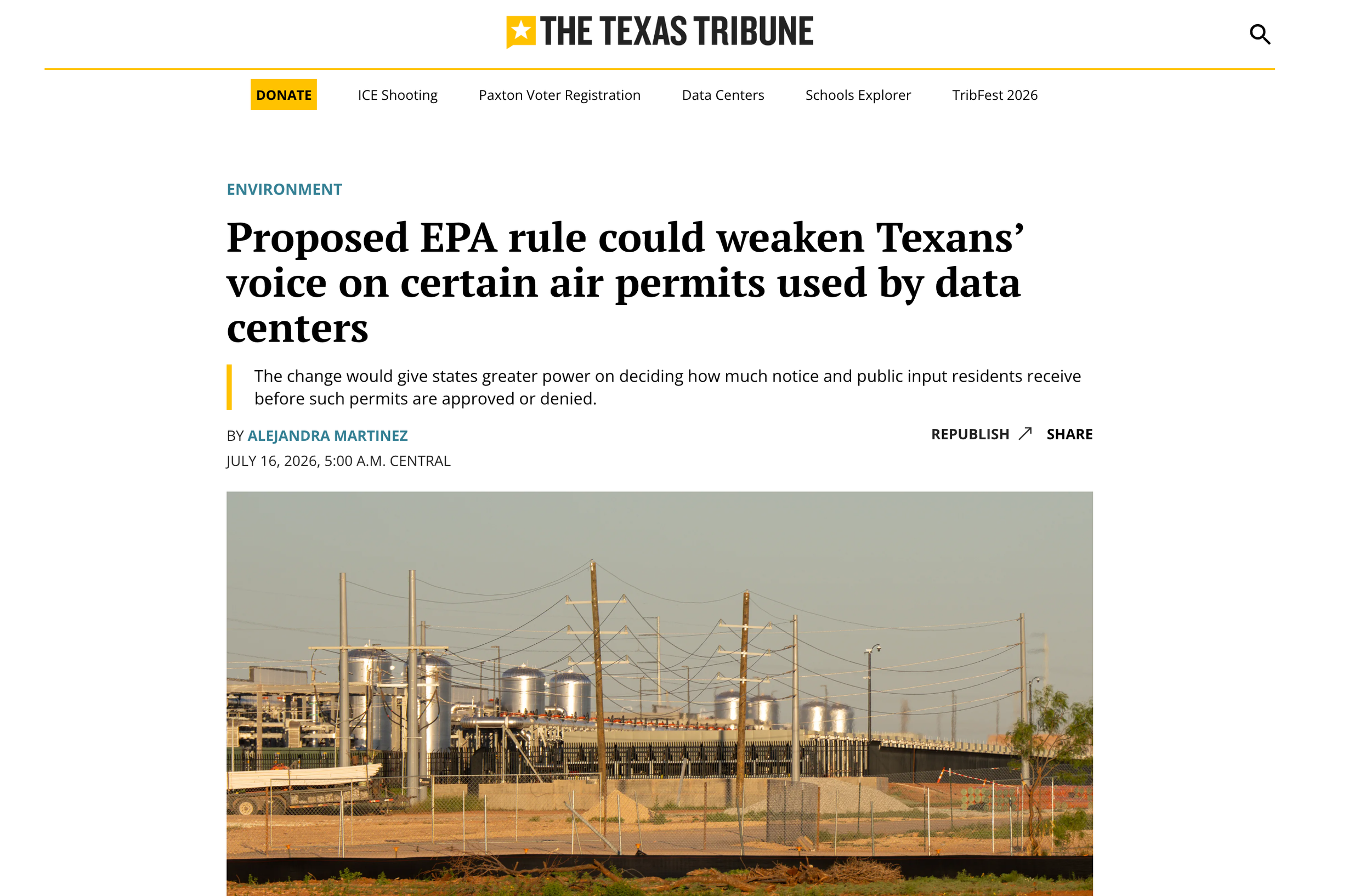
The U.S. Environmental Protection Agency is proposing to change its rules for permits issued to so-called minor air polluters by handing states greater power to decide how much notice and public input residents receive before such permits are approved or denied.
For Texans, the rule change could limit their right to speak out about a type of pollution permit that’s commonly issued to concrete batch plants and rock crushers, but is becoming increasingly used by massive data centers coming to the state.
It would allow the Texas Commission on Environmental Quality — the state’s environmental regulator — the authority to rewrite its own rules, which could include scaling back opportunities to protest or challenge permits before they are issued.
PUBLIC HEALTH WATCH
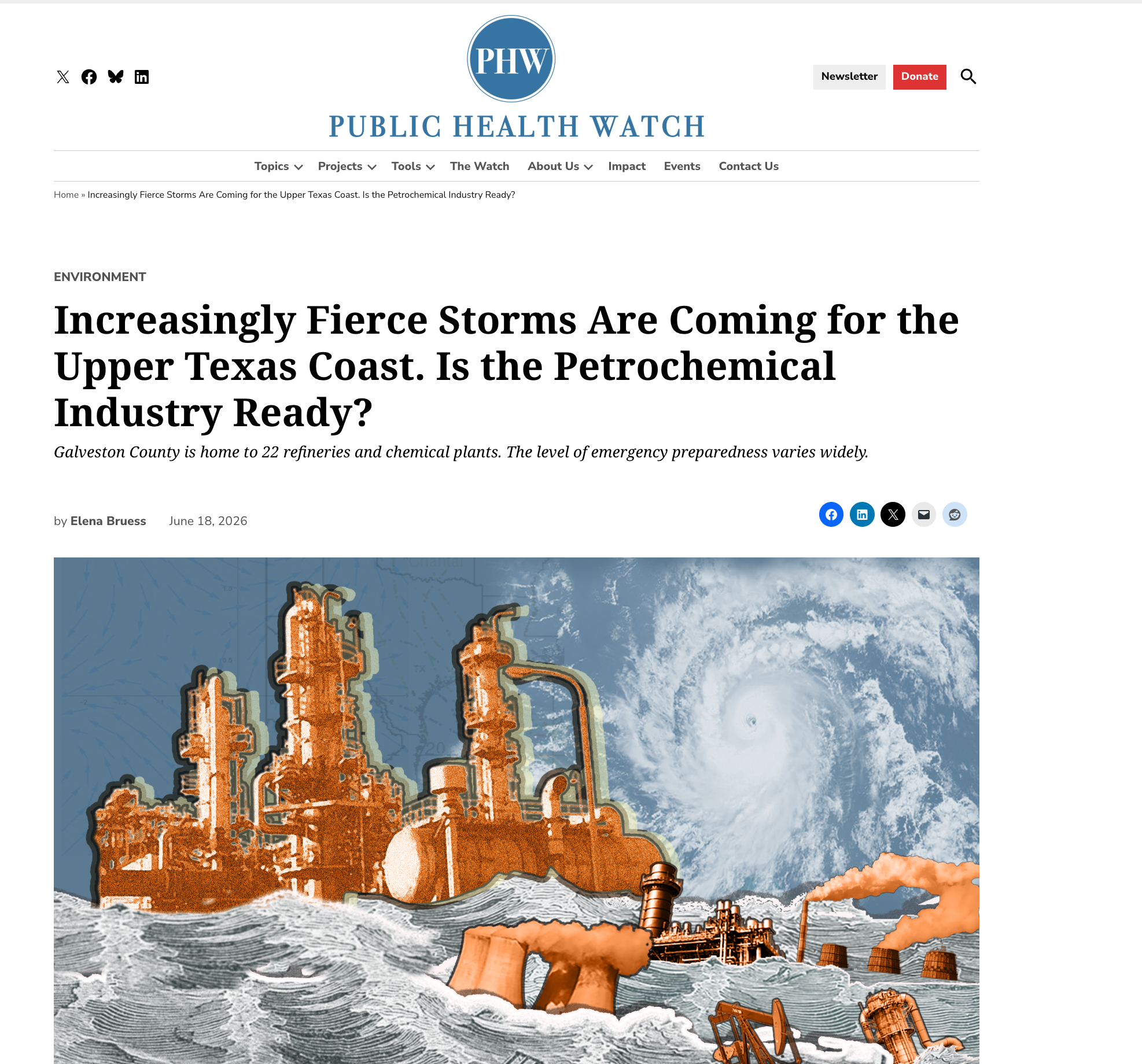
Nearly two decades had passed since the storm. For many, the memory of what had happened on Goat Island had largely vanished into the Gulf of Mexico.
Instead, what residents remembered that year were the piles of boats and cars washed up along the highway to Galveston and the twisted mounds of debris where homes once stood. It was late summer 2008, and Hurricane Ike had just struck, decimating parts of the upper Texas Gulf Coast.
TEXAS TRIBUNE
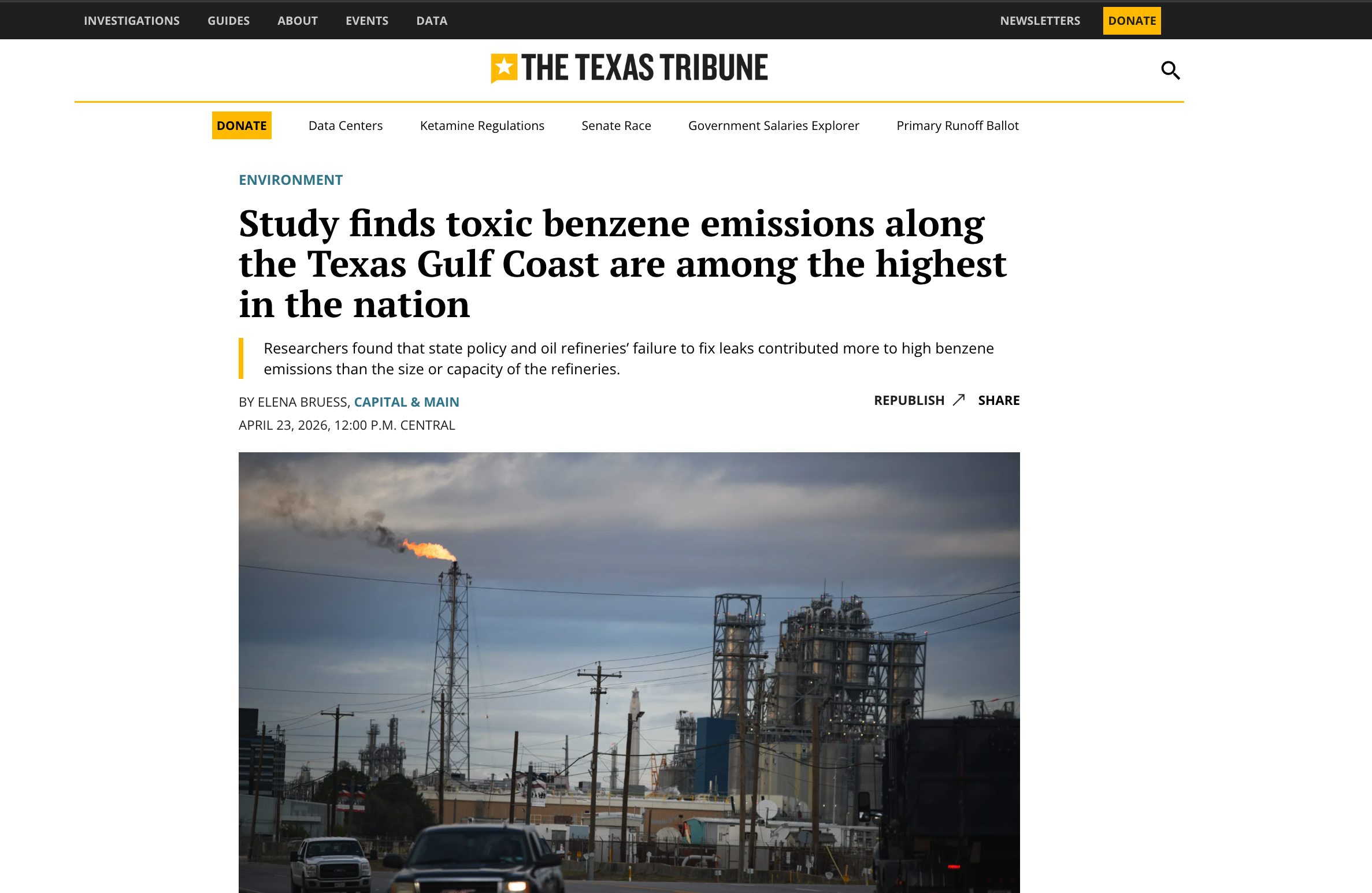
“It’s not just an immediate impact, but a multigenerational toxic harm that we experience because of emissions like benzene and all of these other petrochemicals,” Srivastava said.
Media Requests
Please direct all media and speaking requests to brandon@fencelinewatch.org
Press Releases and Organizational Communication
EPA Region 6 hasn't held a community outreach call since January 2025. Fenceline Watch & 44 other orgs sent a meeting request to update communities on what they've been doing in our region.
Today, Fenceline Watch, alongside more than 85 communities living on the frontline of chemical disasters, indigenous communities, elected officials, and environmental advocates, have signed a letter urging Congress to fully fund the U.S. Chemical Hazard and Safety Investigation Board as the agency faces potential elimination.
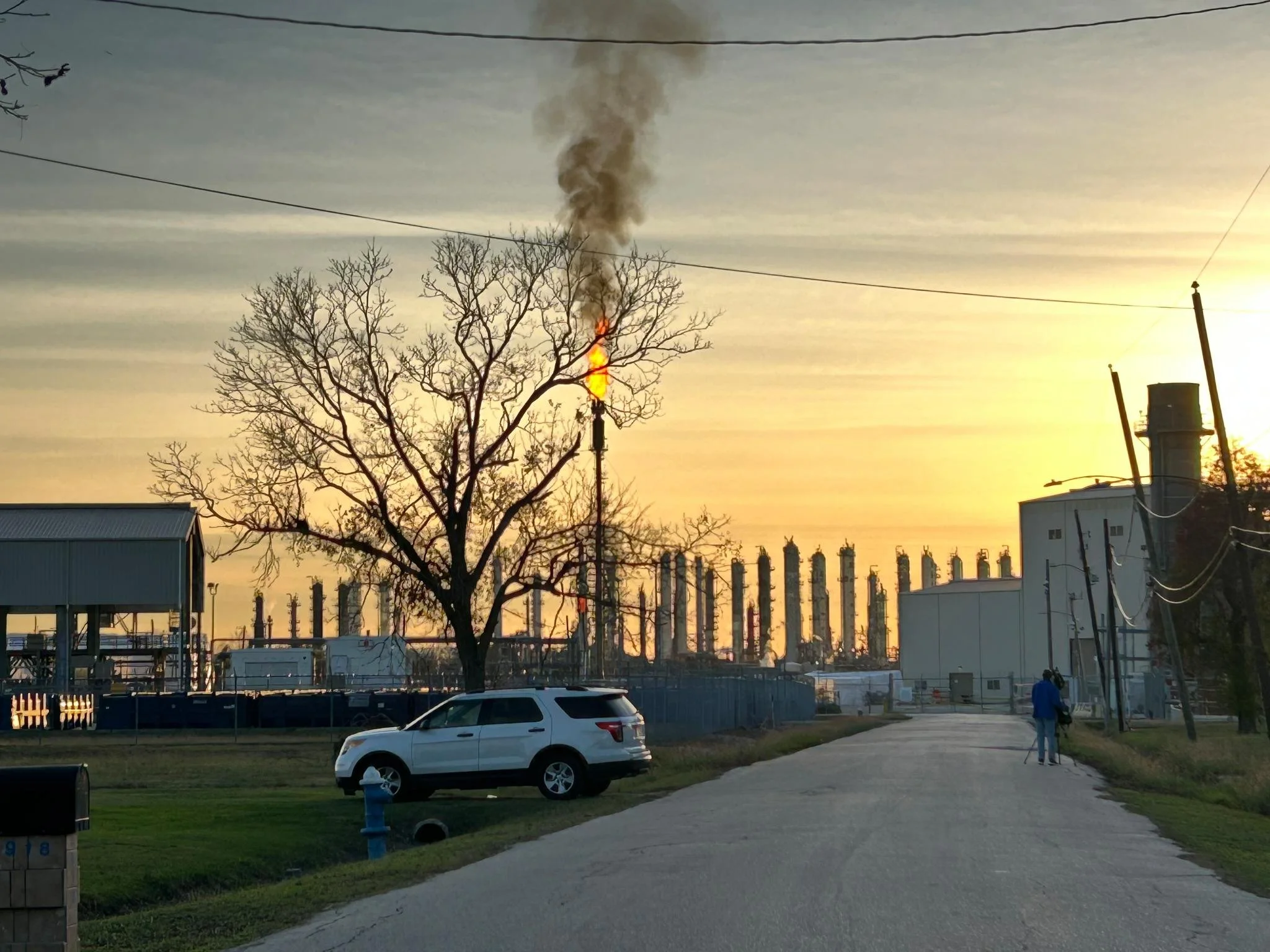
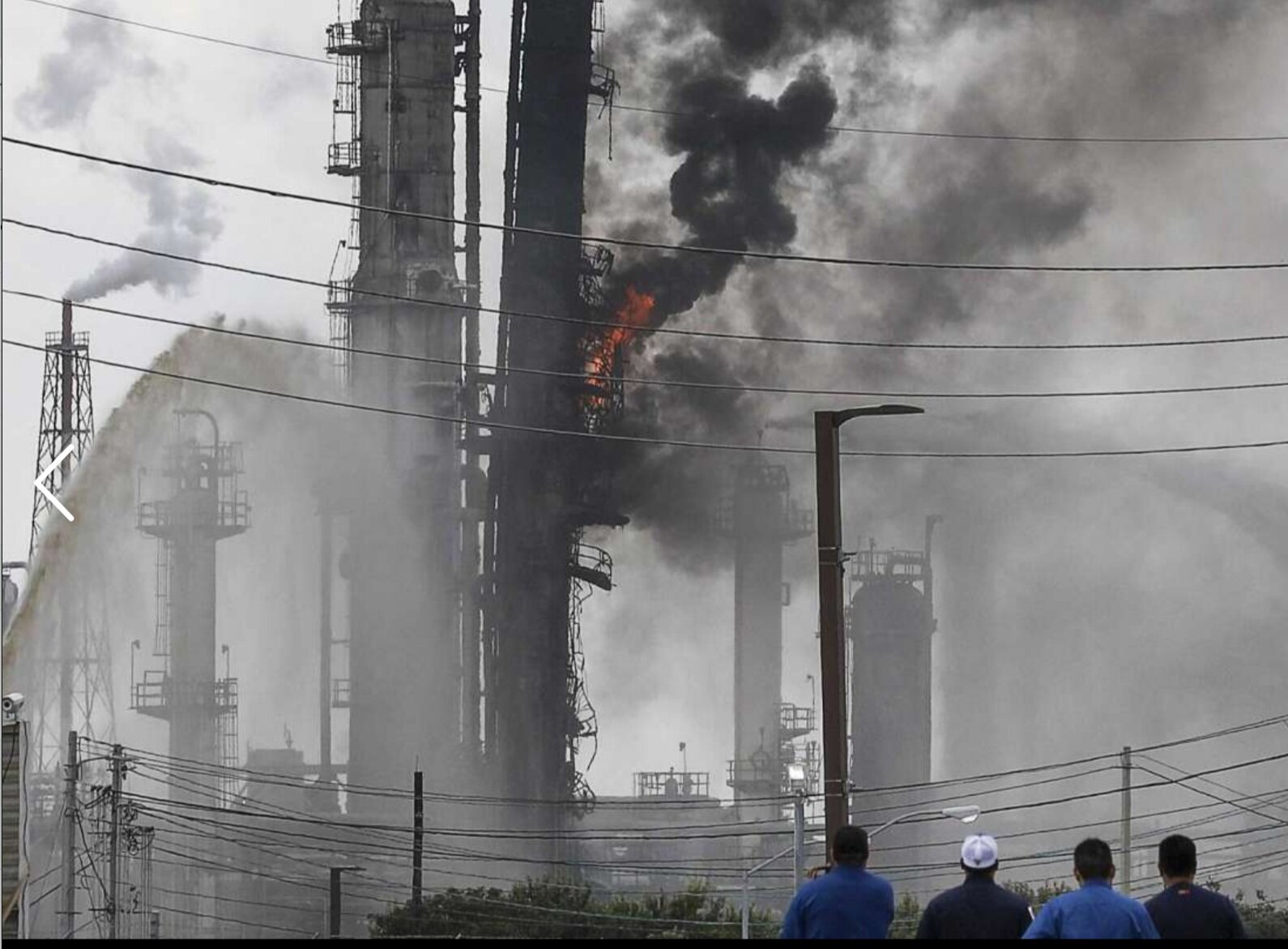
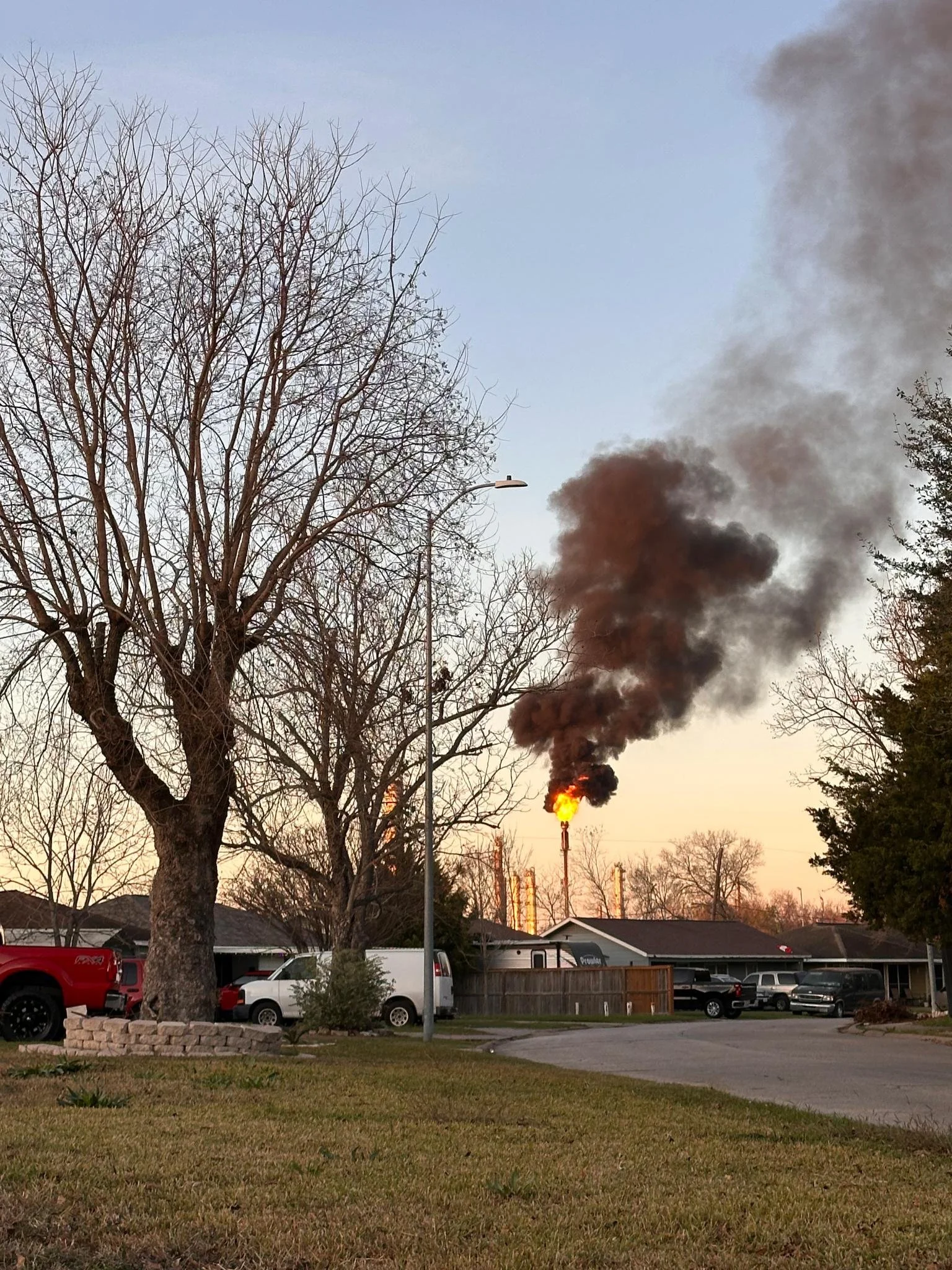
The Shell Deer Park Chemicals facility disaster that occurred on May 5th, and is still ongoing, is a disgraceful event that lays bare Shell’s disregard for public safety and health. This disaster is simply the most recent disaster in a pattern of safety violations that put the surrounding neighborhoods and fenceline communities in Deer Park, Houston, and surrounding areas in harm's way.
Official Statements and Public Comments
On Monday, May 11, 2026, Fenceline Watch formally submitted a public comment to the U.S. Environmental Protection Agency to stop planned revisions of the Risk Management Program. A regulation under the Clean Air Act for facilities that handle the most hazardous substances and chemicals. Read the full comment.