
Chemical Disasters &
Crisis Response
Overview
With more than 600 chemical manufacturing facilities in the greater Houston area, a chemical disaster can occur at any time. In 2025, 19 chemical disasters occurred in Texas, six of which occurred in our communities along the Houston Ship Channel, resulting in injuries and mandatory shelter-in-place orders. In communities like Houston's, it is completely legal to have schools, daycares, senior centers, parks, and homes along the fenceline of oil, gas, petrochemical, and other hazardous infrastructure. A lack of zoning, enforcement, and regulation, along with historical redlining practices, creates these dangerous environments for our communities.
Chemical disasters pose a significant threat to our lives, both during and after these events. We experience vomiting, loss of consciousness, skin burns, organ failure, damage to reproductive systems, other health harms, and, in the most severe cases, death. The harm we shoulder extends beyond our lifetimes and is passed on to our children and future generations. The effects manifest in mutagenic harm, low birth weights, delayed development, and neurological damage. We are left with irreversible damage to our bodies, families, environment, and our futures.
As an environmental justice organization, we share lessons learned, guide partners through crisis response, and provide repositories of vital information. We host and participate in webinars to educate community members and advocates on preparing for and responding to a chemical disaster.
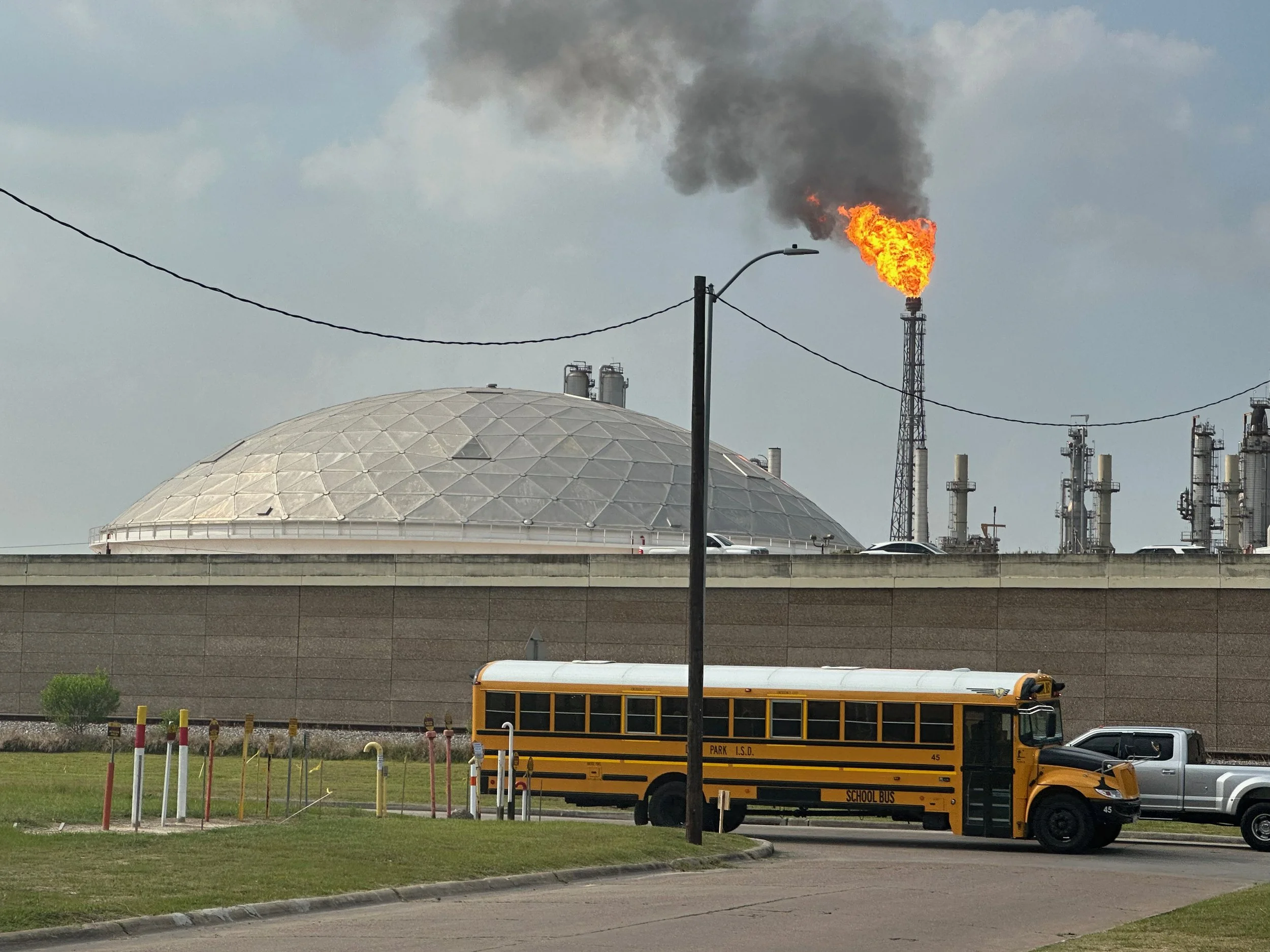
A chemical explosion at the Shell facility in Deer Park, TX.
Photo by Yvette Arellano, May 2023
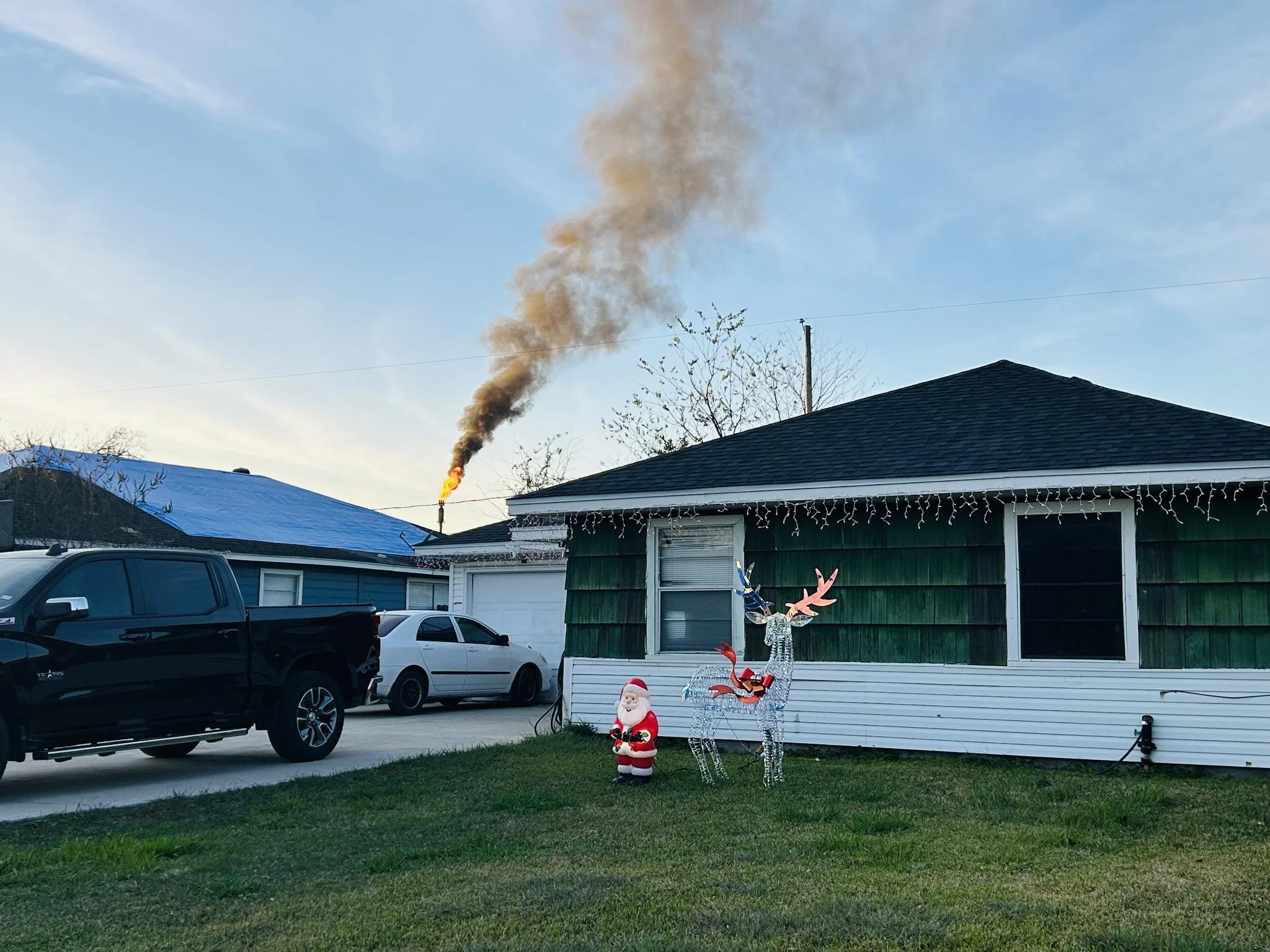
A chemical emission from the Invista facility in Houston.
Photo by Yvette Arellano, December 2025
Chemical Disasters
Chemical disasters occur nearly every other day on average. Because hazardous chemical facilities are underregulated, they pose risks that extend beyond their immediate areas, including chemical & toxic gas releases, explosions, and other disasters.
According to the EPA, from 2004 to 2013, more than 2,200 chemical fires, explosions, or toxic releases occurred, affecting nearly 500,000 people.
In March 2017, more than 160,000 people urged the EPA to strengthen federal regulations to prevent chemical disasters, including 122 community-based, first-responder, health, labor, and environmental groups.
Chemical Facility Regulation
A key to preventing chemical disasters is strict regulatory guidelines and oversight by environmental agencies like the U.S. Environmental Protection Agency and the Texas Commission on Environmental Quality. Another key step the industry can take is to follow the recommendations put forth by the U.S. Chemical Safety Board, the only independent federal agency that investigates chemical disasters.
In Houston, 251 hazardous materials facilities are regulated by the EPA under the Risk Management Plan (RMP) program because the chemicals these facilities handle are so hazardous that the facility’s operators must have a plan in place that:
identifies the potential effects of a chemical accident,
identifies steps the facility is taking to prevent an accident, and
spells out emergency response procedures should an accident occur.
In the U.S., 130 million people live within 3 miles of an RMP facility, increasing their risk of experiencing a chemical disaster. 20 million identify as Black or African American, 32 million identify as Hispanic or Latino, and 44 million earn less than or equal to twice the poverty level.
Crisis Response
As neighbors to the largest petrochemical complex in the U.S., the threat of a chemical emission, explosion, or fire is imminent. We work alongside partners to educate community members about chemical disaster preparation & response, accurately report active chemical disasters in the Houston, TX area, and call on regulatory agencies to more closely monitor facilities.